Making a Memory Book With Your Child and Grandparent
A memory book - a simple scrapbook of photos, stories, and mementos built *with* a grandparent, not just about them - is quietly one of the best things a family facing dementia can make. For the grandparent, it's reminiscence therapy in disguise: old photographs unlock the long-term memories dementia touches last, and telling those stories is joyful, confidence-restoring work. For the child, it's a craft project that doubles as connection, a way to hear family stories while they can still be told. And for the family, it becomes both a care tool and an heirloom. Here's how to make one, step by step.
A memory book - a simple scrapbook of photos, stories, and mementos built with a grandparent, not just about them - is quietly one of the best things a family facing dementia can make. For the grandparent, it's reminiscence therapy in disguise: old photographs unlock the long-term memories dementia touches last, and telling those stories is joyful, confidence-restoring work. For the child, it's a craft project that doubles as connection, a way to hear family stories while they can still be told. And for the family, it becomes both a care tool and an heirloom. Here's how to make one, step by step.
Why do memory books work so well in dementia?
Because dementia usually takes memories in reverse order - recent first, distant last. A person who can't recall this morning's breakfast may narrate their wedding day in detail. Photographs from decades ago are keys to those still-intact rooms, and reminiscence - guided remembering with photos and objects - is one of the most consistently soothing, engagement-boosting activities in dementia care. A memory book packages that therapy into something a child can hold, and turns "visiting Grandma" into "working on our book."
How do we start?
Gather before you sit down together:
1. Choose a simple album - big pages, easy sleeves or glue, nothing precious. This book is for handling, not archiving.
2. Collect 20-40 old photos (copies, not originals) spanning the grandparent's whole life - childhood, young adulthood, wedding, work, holidays, the grandchild's baby years.
3. Add texture: postcards, a recipe card in her handwriting, a concert ticket, fabric from a famous dress.
4. Brief your child on the golden rule: we say "Tell me about this one" - never "Do you remember this?" One invites a story; the other sets a test.
What happens in a session?
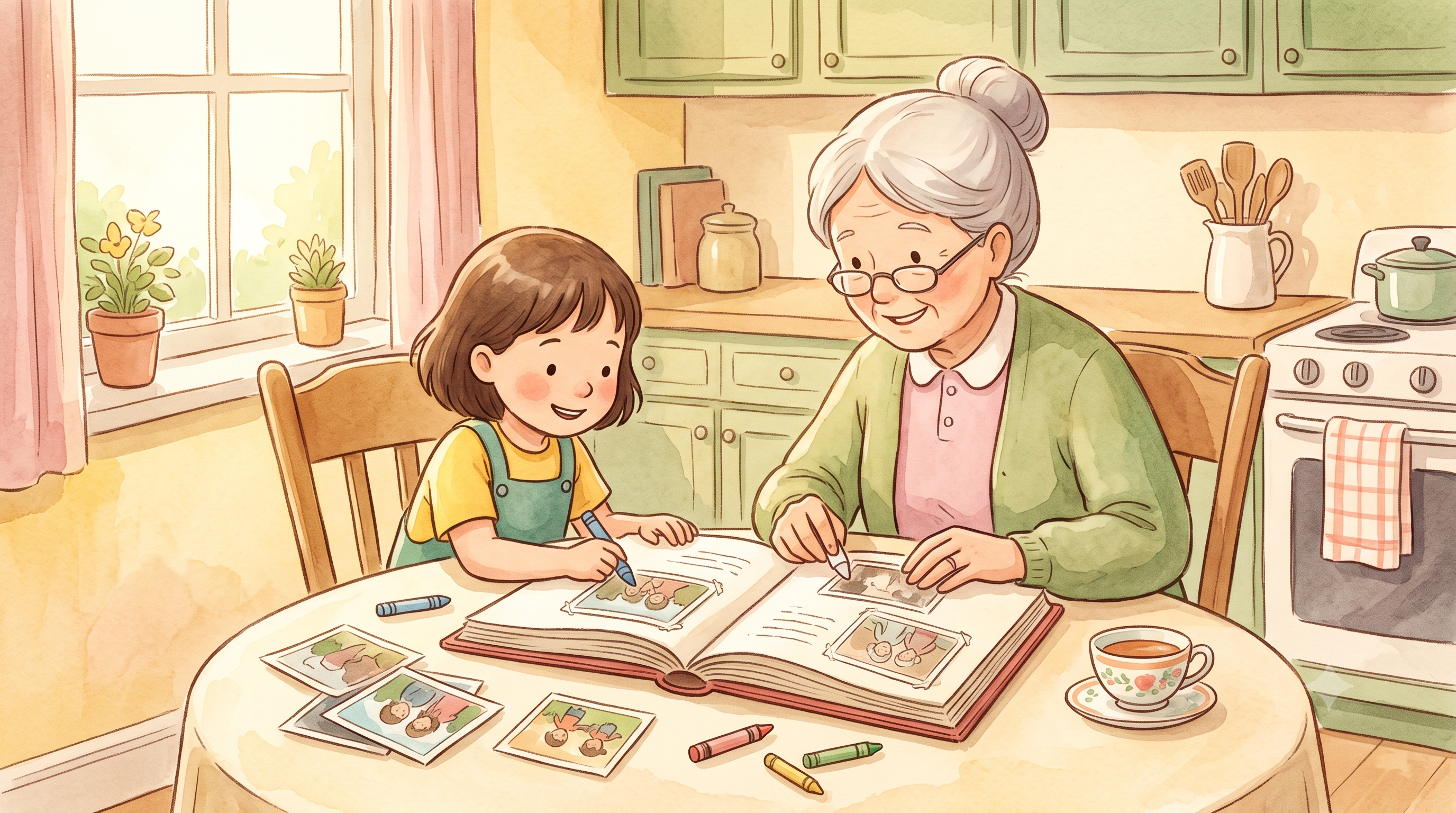
Keep sessions short - twenty to thirty minutes, at the grandparent's best time of day. The child picks a photo and asks about it; the grandparent tells whatever comes; the parent quietly notes down the good lines. Then the child glues the photo in and decorates the page while the story is captioned beneath it in big, clear writing: "Grandma Rose, age 19, dancing at the village fair. 'We danced until our shoes wore out.'" Names, places, and relationships in every caption - future-Grandma will need them, and so will future-grandchildren.
Don't chase accuracy. If the story wanders or the details shift between tellings, let them. The point is the telling, not the fact-checking - and the wandering versions are often the best ones.
What goes in besides the past?
Leave the last section for now: photos from recent visits, the child's drawings, a page of "things we love doing together." This keeps the book alive - every visit can add a page - and it gently makes the book about the relationship, not just the history. Some families add a "Who's who" page at the front with labeled photos of family members; on foggy days, it's the page that gets used most.
How does the book help after it's made?
Three ways. It becomes a calming tool - a familiar, personal thing to look through during agitated or anxious moments. It becomes a visit script - a child who doesn't know what to say always has "shall we look at our book?" And it becomes a bridge for others - care staff and new visitors who flip through it meet the whole person, not just the patient. Long after, it becomes something else entirely: the family's record of her voice and stories, gathered while gathering was still possible - a gift your child made without fully knowing it.
For more ways to spend good time together, see our companion guide to dementia-friendly activities for kids and grandparents.
Frequently asked questions
What should go in a memory book for someone with dementia?+
Copies of old photos from across their life, short captions with names and places, mementos like recipes or tickets, a labeled "who's who" family page, and a living section of recent photos and grandchildren's drawings.
How do you ask a person with dementia about old photos?+
Prompt, don't quiz: say "Tell me about this one" rather than "Do you remember this?" Open prompts invite storytelling; memory tests create anxiety and shut it down.
Is making a memory book good for children too?+
Yes - it gives them a comfortable role during visits, preserves family stories they'd otherwise never hear, and helps them process the changes in their grandparent through a shared, positive project.