When Siblings React Differently: Supporting Each Child in Their Own Way
One child sobs, another shrugs and asks what's for dinner, a third starts acting out at school — and all three are responding normally to the same grandparent's dementia. Children process hard things through the lens of their age, temperament, and relationship with the person, which means siblings in one family can look like they're having entirely different experiences. They usually are. The most helpful thing a parent can do is resist comparing them, meet each child where they actually are, and trust that a quiet child isn't necessarily fine and a tearful one isn't necessarily struggling more.
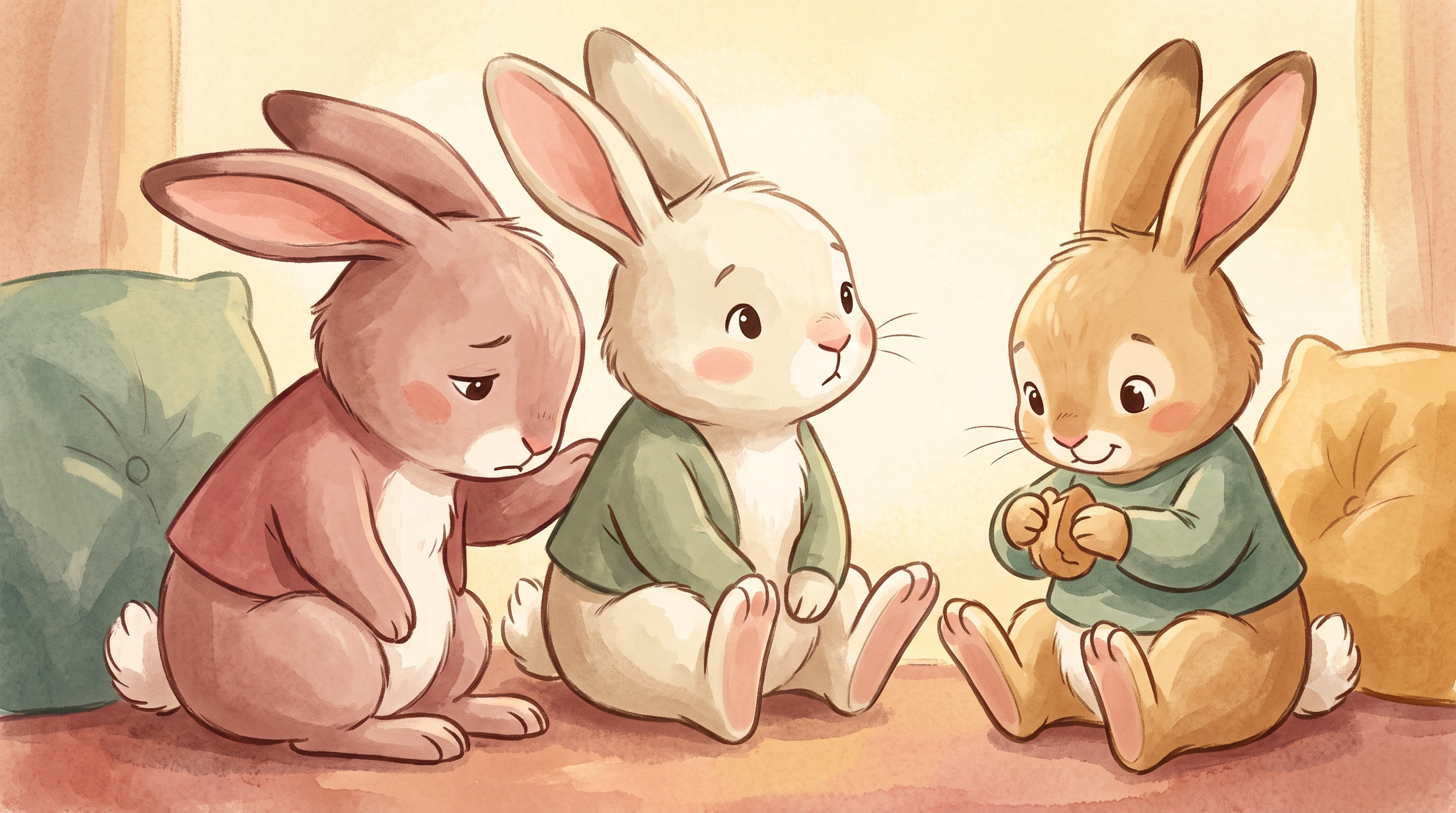
One child sobs, another shrugs and asks what's for dinner, a third starts acting out at school — and all three are responding normally to the same grandparent's dementia. Children process hard things through the lens of their age, temperament, and relationship with the person, which means siblings in one family can look like they're having entirely different experiences. They usually are. The most helpful thing a parent can do is resist comparing them, meet each child where they actually are, and trust that a quiet child isn't necessarily fine and a tearful one isn't necessarily struggling more.
Here's how to make sense of the differences and support each child.
Why the differences are so large
Three things shape how a child responds, and siblings differ on all of them.
Age and development. A four-year-old and a ten-year-old are working with completely different equipment. Younger children live in the present and may seem unbothered one moment and upset the next; they often can't sustain grief the way adults expect. Older children grasp the trajectory — that this will get worse, that it can't be fixed — and so may carry more anticipatory sadness or worry.
Temperament. Some children externalize (crying, questions, anger), some internalize (quiet, watchful, worries at bedtime). Neither is healthier. The internalizing child is often assumed to be coping best, when in fact they may simply be processing privately.
The individual relationship. Siblings rarely have identical relationships with a grandparent. The child who spent every Sunday with Grandpa is losing something different from the sibling who saw him less, or who is too young to have many memories of him well. Their grief is proportionate to their own bond, not to a family average.
What different reactions can look like
It helps to recognize the range as normal:
- Visible sadness — crying, wanting to talk, asking the same questions repeatedly.
- Apparent indifference — a shrug, a quick change of subject, wanting to go play. Very common in younger children, and often a sign of limited capacity to hold big feelings, not lack of love.
- Anger or acting out — irritability, defiance, trouble at school. Distress that doesn't have words often comes out sideways in behavior.
- Anxiety — worries about you, about themselves, about health; trouble sleeping; not wanting to leave you.
- Over-responsibility — the child who becomes the helper, the good one, the one who doesn't add to your load. This can look like excellent coping and is worth watching gently.
- Regression — a younger child returning to earlier behaviors (clinginess, bedwetting, baby talk) when stressed.
Very often, none of it shows up in conversation at all. Bedtime resistance, appetite changes, and behavior shifts are frequently a child's real report.
How to support each child
Meet them individually. Try to give each child a small pocket of one-on-one time where they could raise something if they wanted to. Car rides, bedtime, and side-by-side activities work far better than a family sit-down, where the loudest child sets the tone and the quiet one disappears.
Don't compare — out loud or in your head. "Your sister isn't upset about it" teaches a child their feelings are wrong. Equally, "he doesn't seem to care" can become a label a child grows into. Each response is valid on its own terms.
Be careful with roles. Families assign these quickly — the sensitive one, the tough one, the helper. Children absorb them and then perform them, which can leave the "tough" child with nowhere to put sadness and the "helper" carrying too much. Try to leave the roles open.
Adjust the explanation to each child. The same news needs different words for a five-year-old and an eleven-year-old — our age-by-age guide can help. It's fine, and better, for siblings to get different-sized versions of the truth.
Watch the quiet one, gently. Don't force them to talk — pressure closes children down. Instead, stay available, name feelings casually ("I felt sad after that visit — sometimes I do"), and let them come to you. Reading a story together is often a softer doorway than a conversation.
Let siblings hear each other. Sometimes it helps for children to know their sibling feels differently and that's allowed. It normalizes the range and reduces the sense that anyone is doing it wrong.
When to seek extra support
Most varied reactions settle with time and reassurance. It's worth talking to a teacher, counselor, or your doctor if a child shows persistent changes that don't ease — ongoing sleep problems, withdrawal from friends and activities, marked school difficulties, prolonged anxiety, or distress that seems to be deepening rather than gradually softening.
There's no correct way for a child to respond to a grandparent's dementia, and siblings will rarely respond alike. The goal isn't to bring them to the same place. It's to make sure each one — the crier, the shrugger, the helper, the one acting out — knows their feelings make sense, that they're not alone with them, and that you're there when they're ready.
Frequently asked questions
Why do my children react so differently to their grandparent's dementia?+
Because they're processing through different equipment: their age and development, their temperament (externalizing vs. internalizing), and their own individual relationship with that grandparent. Different reactions are normal and don't indicate who cares more.
My child doesn't seem upset at all — should I worry?+
Usually not. Younger children especially can't sustain big feelings and may seem indifferent, while quieter children often process privately. Stay available rather than pressing, and watch indirect signs like sleep, appetite, and behavior changes.
How do I support siblings who are grieving differently?+
Give each child one-on-one time, avoid comparing them or assigning roles ("the sensitive one"), tailor the explanation to each child's age, watch the quiet one gently without forcing conversation, and let siblings see that different reactions are all allowed.