Staying Close From Far Away: Long-Distance Connection When a Grandparent Has Dementia
When a grandparent with dementia lives far away, meaningful connection is still absolutely possible — it just looks different from a visit. Video calls can be wonderful or confusing depending on the person and the day, so the most reliable approach is to send things that live in their world: a card in the mail, a drawing on the wall, a recorded song, a photo they can hold. Keep it short, warm, and repeatable, and don't measure success by whether they know who's calling. Presence can be delivered by post, and love travels perfectly well across a distance.
When a grandparent with dementia lives far away, meaningful connection is still absolutely possible — it just looks different from a visit. Video calls can be wonderful or confusing depending on the person and the day, so the most reliable approach is to send things that live in their world: a card in the mail, a drawing on the wall, a recorded song, a photo they can hold. Keep it short, warm, and repeatable, and don't measure success by whether they know who's calling. Presence can be delivered by post, and love travels perfectly well across a distance.
Here are gentle ways to help your child stay close.
Why distance is hard (and why it isn't hopeless)
Distance removes the two things that make dementia visits work best: physical presence and sensory sharing. You can't hold a hand, share a slice of cake, or sit quietly in a garden over the phone. And real-time conversation — the thing distance leaves you with — is often the hardest mode for someone with dementia, especially as the illness progresses.
But here's the reframe that helps: connection with a person with dementia was never really running on conversation and recognition anyway. It runs on warmth, familiarity, and feeling. Those can travel. A card that gets propped on a windowsill, a child's drawing taped where they'll see it every day, a recorded song — these can do quiet, repeated work long after a phone call would have ended.
Making video calls work (when they work)
Video calls can be lovely, and they can also be bewildering — a talking face in a rectangle isn't intuitive for everyone. A few things help:
- Keep them short. Five or ten good minutes beats a long call that drifts into confusion or fatigue.
- One face at a time. A crowded screen of relatives waving is hard to process. Let one person be on screen, close, well-lit, speaking slowly.
- Have a caregiver nearby to set it up, sit alongside, and gently bridge — their presence makes the whole thing feel safer.
- Try different times. Many people with dementia have better and harder parts of the day; a morning call may go very differently from an evening one.
- Bring an activity, not just talk. Have your child sing a song, show a drawing, read a very short story, or hold up a pet. Doing something is easier than making conversation.
- Let it be okay if it doesn't work. Some days a call won't land. That's the illness, not a failure of the relationship — and not your child's fault.
Things to send (often the best option)
Physical things have a real advantage: they stay, and they can be enjoyed again and again without needing anyone to be "on."
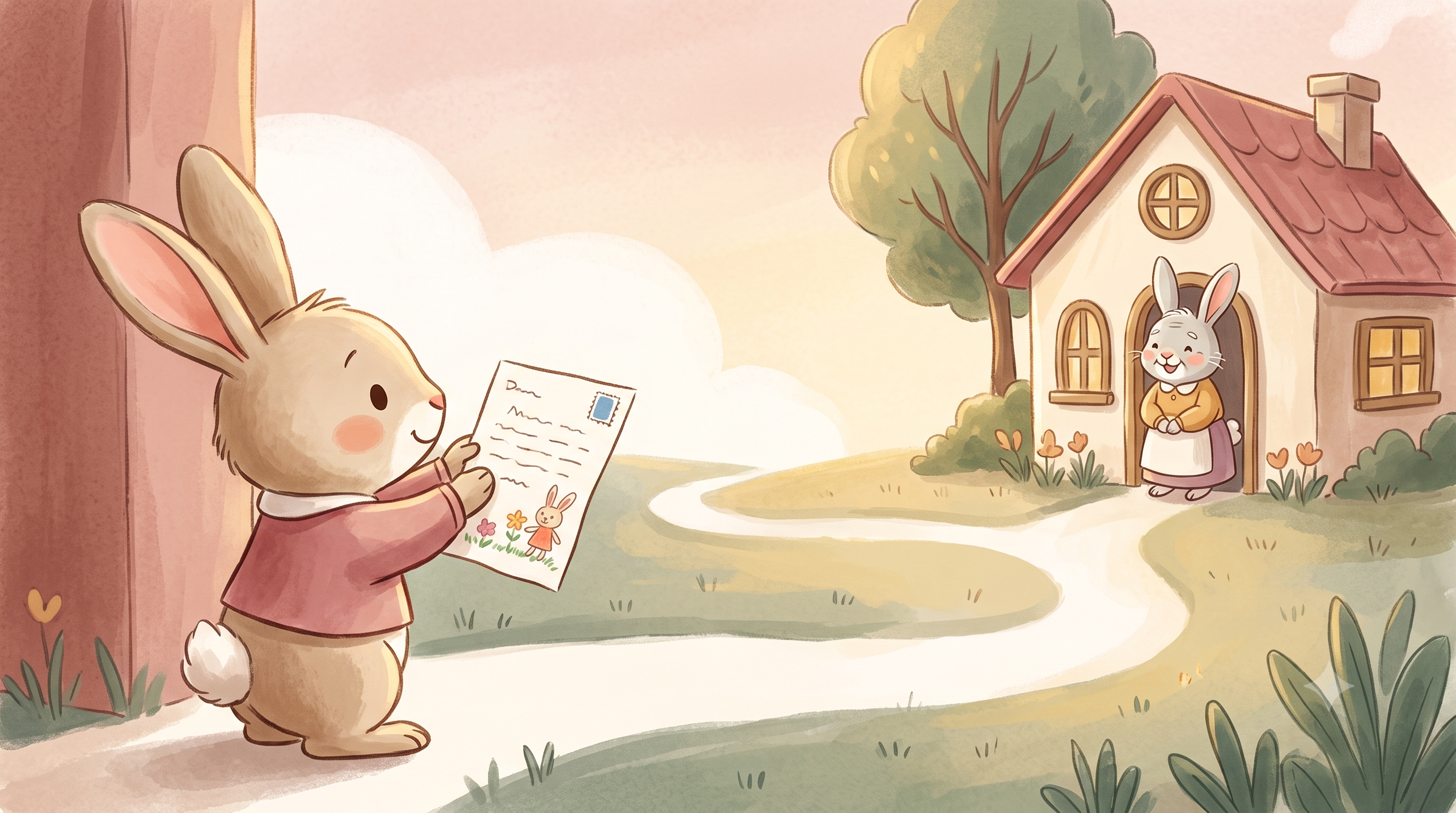
- Cards and letters. Simple, brightly-coloured, with a short message and a big signature. Children love making them, and they can be reread endlessly.
- Drawings and paintings. Taped up in a room, a child's artwork becomes a daily presence — a small ambassador of love on the wall.
- Photos. Printed, clear, labelled simply on the back ("Ellie, age 6"). Familiar faces in a form someone can hold.
- A recorded message or song. A short voice recording or video that a caregiver can replay when your loved one is in the right mood — no scheduling required.
- Something sensory. A soft item, a familiar scent, a favourite sweet (check with caregivers first). Comfort travels well.
- A little photo book. The memory book idea works beautifully by post — and a child can add to it over time.
Make it regular if you can. A card every few weeks builds a rhythm of presence that a single grand gesture doesn't.
Helping your child with the strange parts
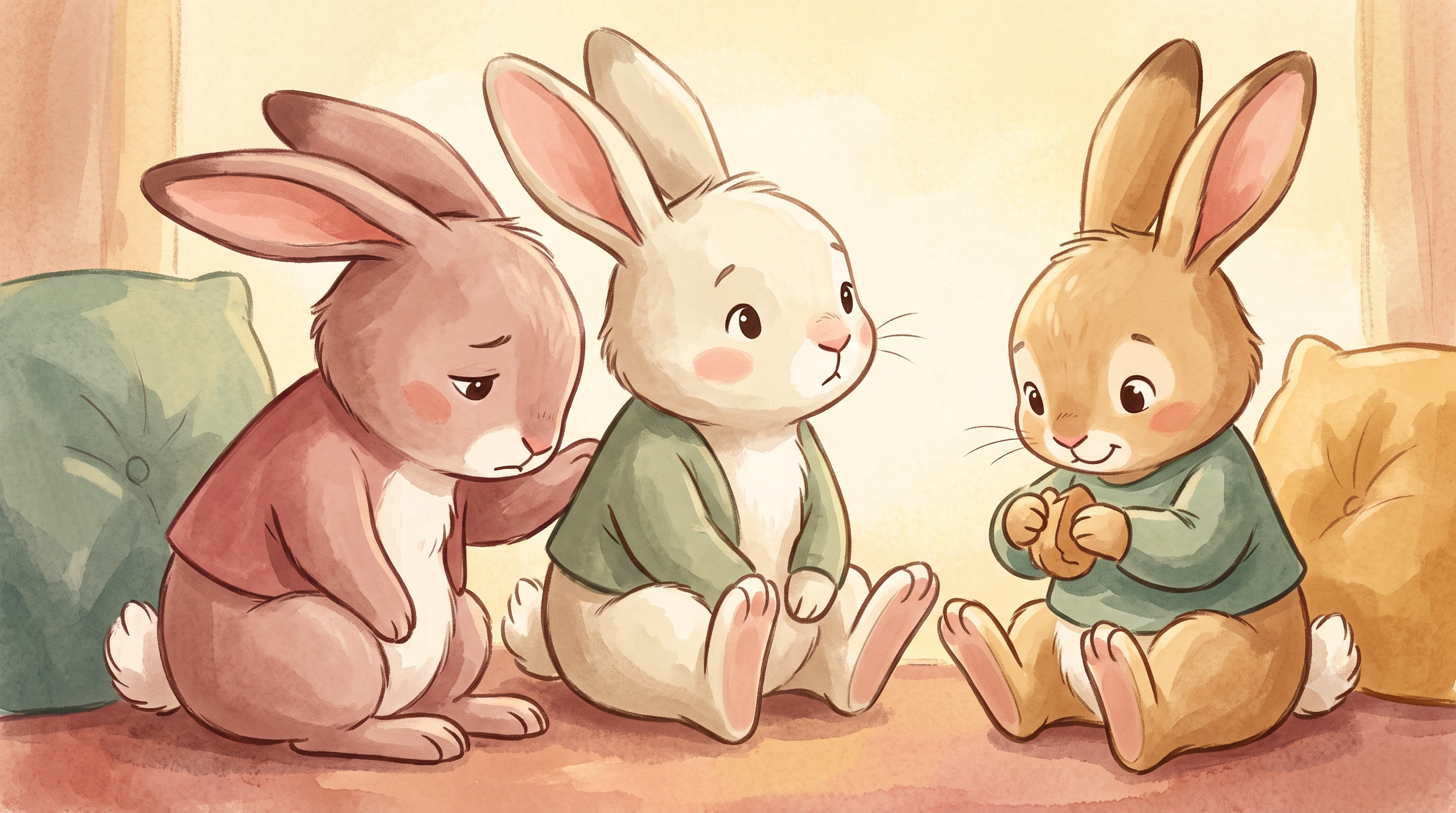
Long-distance connection has its own confusions for children. Grandma may not know who's on the phone. She may say the same thing several times, or not want to talk at all. Prepare your child gently: "She might not remember it's you — that's the sickness, not you. What matters is she'll feel happy while we're talking."
And help them see the value of what they send, even without feedback. Children can be discouraged by making something and hearing nothing back. It helps enormously if a caregiver at the other end can send a photo of the drawing on the wall, or a line about how she smiled at the card. Ask for that if you can — it closes the loop and keeps your child's generosity alive.
Distance takes away a lot, but it doesn't take away the thing that matters most. A child's drawing on a wall, a familiar voice in a short recording, a card that gets picked up again and again — these are real presence, delivered differently. Your child can absolutely stay close to a grandparent far away. It just travels by post, and in small warm moments, rather than in conversation.
Frequently asked questions
How can children stay connected to a grandparent with dementia who lives far away?+
Through short video calls (one face, well-lit, at a good time of day) and, often more effectively, through physical things — cards, drawings, printed photos, recorded songs or messages, and small sensory comforts that can be enjoyed repeatedly.
Are video calls good for people with dementia?+
Sometimes. They can be lovely, but a face on a screen can also be confusing, especially as dementia progresses. Keep calls short, show one person at a time, have a caregiver nearby, and try different times of day — and accept that some days won't work.
What if my grandparent doesn't recognize my child on the phone?+
That's the illness, not a failure of the relationship. Prepare your child in advance, and focus on the warm feeling the contact leaves rather than on recognition. Sending physical items that can be revisited often works better than real-time calls.