When It's Mom or Dad: Helping Children Through Young-Onset Dementia
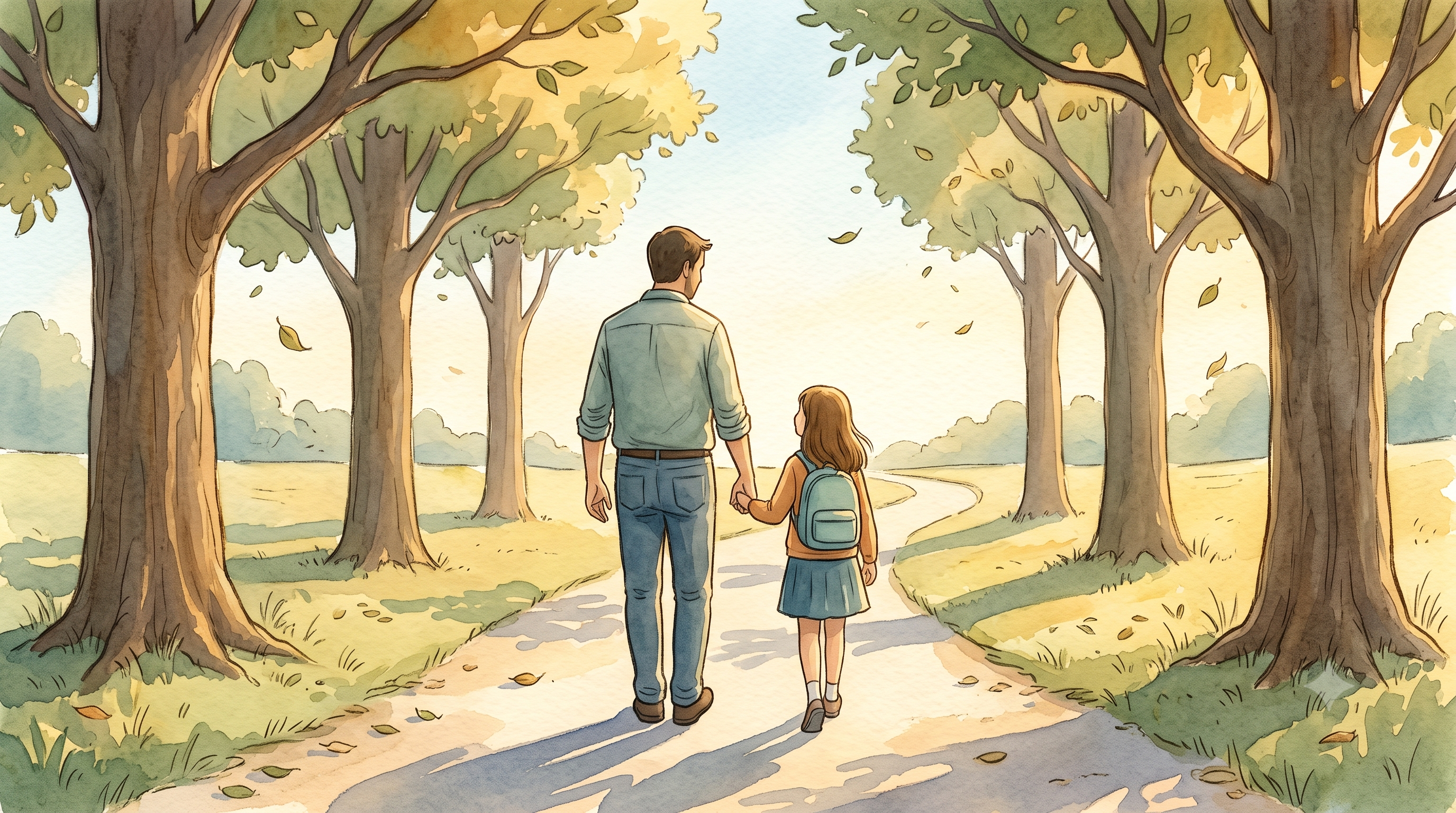
Most of what families read about children and dementia assumes the person is a grandparent. But dementia sometimes arrives decades early - young-onset (or early-onset) dementia begins before 65, often in a person's 40s or 50s - and when it does, the child in the story isn't a visiting grandchild. It's a son or daughter living in the house, watching a parent change. Everything gets harder and closer: the conversations, the losses, the daily logistics, the child's own fears. It is also survivable, and children in these families can grow up connected and okay - but they need more honesty, more structure, and more support than the grandparent playbook provides.
Most of what families read about children and dementia assumes the person is a grandparent. But dementia sometimes arrives decades early - young-onset (or early-onset) dementia begins before 65, often in a person's 40s or 50s - and when it does, the child in the story isn't a visiting grandchild. It's a son or daughter living in the house, watching a parent change. Everything gets harder and closer: the conversations, the losses, the daily logistics, the child's own fears. It is also survivable, and children in these families can grow up connected and okay - but they need more honesty, more structure, and more support than the grandparent playbook provides.
How is this different from a grandparent's dementia?
Three ways that change everything. Proximity: there's no going home after the visit - the illness lives at the breakfast table, and the child sees every repetition, every frustration, every hard evening. Role reversal: the person changing is the one who was supposed to do the looking-after, which shakes a child's basic sense of safety. The long horizon: a child may spend most of their childhood alongside the illness, so support has to be built for years, not visits. Because young-onset dementias also more often begin with personality, behavior, or language changes rather than forgetfulness, children may have spent years confused - or blaming themselves - before the diagnosis explains things.
What should we tell the children - and when?
Early, and in truthful layers. Children living with an affected parent always know something is wrong; a diagnosis, gently explained, is usually a relief, because it replaces "Dad doesn't love us anymore" or "I make Mom angry" with "Dad has an illness in his brain." Keep the frame simple: it has a name, it's nobody's fault, it isn't contagious, it will slowly change what Dad can do, and the family will keep adjusting together. Then keep the channel open - young-onset is a moving story, and children need updates as capacities change, ideally before each change becomes obvious. Our age-by-age guide to explaining dementia to a child applies here too; with a parent, err toward more truth, sooner.
What burdens do these children carry quietly?
Four show up again and again. Invisible caregiving: reminding, supervising, covering - children slide into helper roles nobody assigned. Some helping is healthy and gives a sense of agency; a childhood organized around care is not. Draw the line out loud: "Helping Dad find his keys is kind. Keeping Dad safe is my job, not yours." Embarrassment: a parent who behaves unusually at school pickup is socially costly in a way a distant grandparent never is; let kids name that shame without judgment - it coexists with love. The inheritance fear: older children will quietly wonder, or search online, whether they'll get it too. Raise it before they do; for most families the honest answer is reassuring, and for the small minority with strongly hereditary forms, that conversation belongs with a doctor or genetic counselor - not with a frightened teenager alone at midnight. Grief in slow motion: they are losing the parent as they knew them while still being parented by them - the same ambiguous loss grandchildren feel, at ten times the dose.
What actually helps a family live this well?
- Routine as an anchor. When a parent becomes unpredictable, everything else should become more predictable - meals, bedtimes, the Saturday ritual that always happens.
- One-on-one time with the well parent (or another steady adult), protected on the calendar. Children need somewhere the illness isn't the main character.
- A named adult outside the house - aunt, coach, school counselor - who knows the situation and belongs to the child, not to the care plan.
- Tell the school. Teachers who know can catch wobbles early and cut slack on the hard weeks.
- Keep the parent a parent. Find the things Mom or Dad can still do with the kids - music, walks, pancakes, being read to - and protect those fiercely. The relationship should shrink slower than the abilities.
- Get the adults supported too. A well parent running on empty cannot hold children steady; respite, counseling, and community aren't luxuries here.
The long view
Children of young-onset families grow up faster in some ways - and many, looking back as adults, name compassion, patience, and resilience among what those years built. That outcome isn't automatic; it's made, out of honesty, routine, protected childhood, and grown-ups who let the sadness be spoken. You can't spare your child this story. You can decide, every ordinary day, how it's told.
Frequently asked questions
What is young-onset dementia?+
Dementia that begins before age 65 - sometimes in the 40s or 50s. It's much rarer than later-life dementia and more often starts with changes in behavior, personality, or language rather than memory.
Should children be told a parent has dementia?+
Yes, early and honestly in age-appropriate terms. Children living with an affected parent always sense something is wrong, and an explained illness is far less frightening than an unexplained change - or than blaming themselves.
Will my child inherit their parent's dementia?+
Most dementia is not directly inherited, and a parent's diagnosis usually raises a child's lifetime risk only modestly. A minority of young-onset cases are strongly genetic; if that's a concern in your family, discuss it with a doctor or genetic counselor rather than leaving children to search online alone.
How do I stop my child becoming a carer?+
Name the boundary explicitly - small acts of helping are kind, but safety and supervision are adult jobs - and back it up with structure: outside support for the affected parent, protected child-only time, and a trusted adult the child can talk to.