12 Activities Kids and Grandparents With Dementia Can Still Enjoy Together
The best activities for a child and a grandparent with dementia share one design rule: **no memory required.** Anything that lives in the present moment - hands, senses, music, laughter - still works, often beautifully. Here are twelve that families come back to again and again, plus the three rules that make any of them succeed.
The best activities for a child and a grandparent with dementia share one design rule: no memory required. Anything that lives in the present moment - hands, senses, music, laughter - still works, often beautifully. Here are twelve that families come back to again and again, plus the three rules that make any of them succeed.
What can we do indoors?
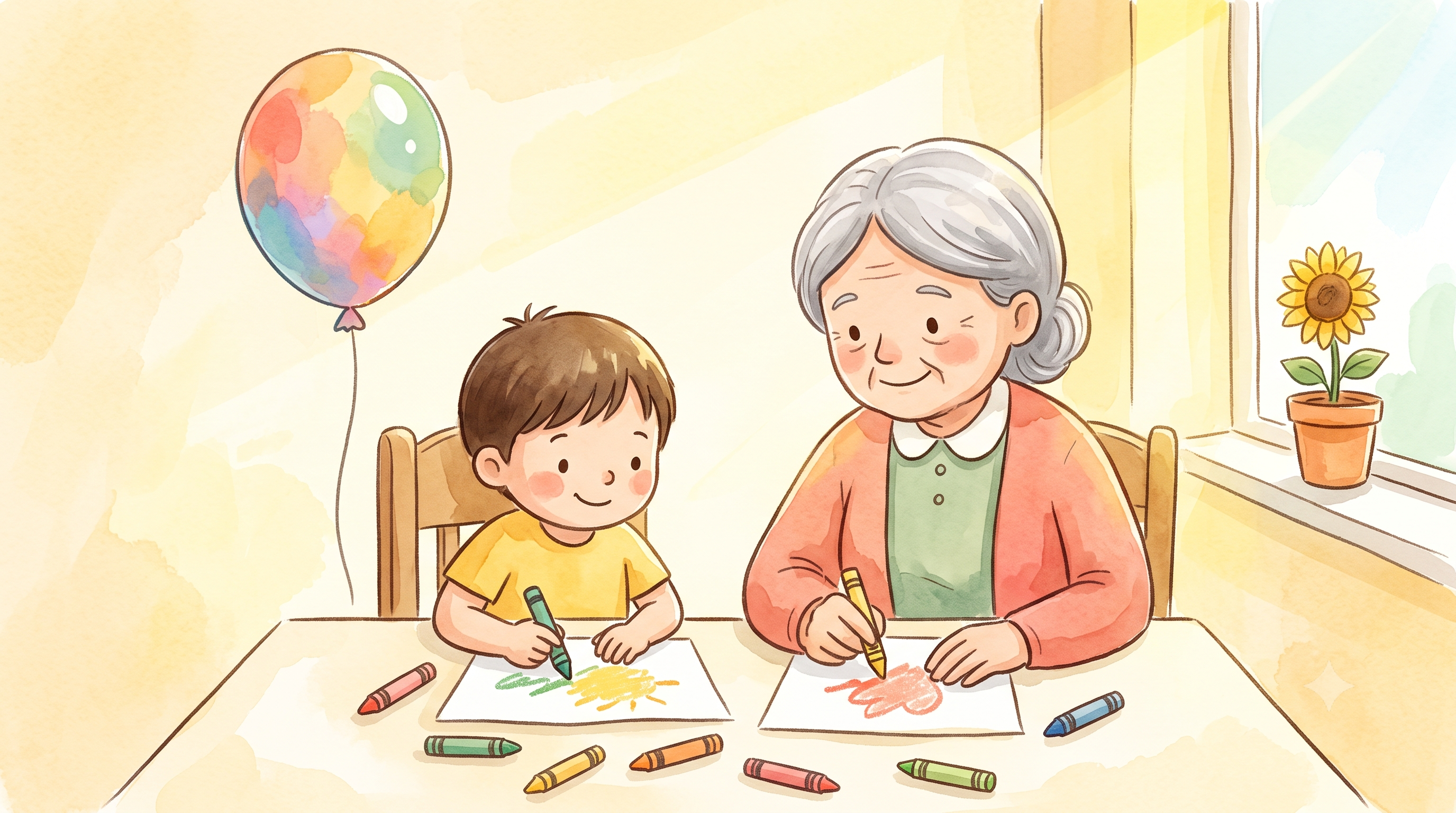
1. Coloring side by side. Parallel play is perfect: no conversation needed, and both parties get the satisfaction of making something. (New members get our free Rosemary Rabbit coloring book - activity one, sorted.)
2. Looking at old photos - with the child as guide. Flip the dynamic: instead of quizzing Grandma ("Who's this?"), the child narrates ("Look, that's you at the beach!"). Old photos often unlock long-term memories and wonderful stories - and can grow into a full memory book project.
3. Music from their youth. Play the songs Grandpa knew at 18. Music reaches parts of the brain dementia touches last - don't be surprised by word-perfect singing from someone who struggles with sentences.
4. Simple baking or no-bake treats. Stirring, sprinkling, decorating cookies. The child handles the steps; the grandparent handles the tasting and the smiling.
5. Folding and sorting. Folding warm laundry, sorting buttons or socks by color. Purposeful hands are calm hands - for fidgety kids and restless grandparents alike.
6. Reading aloud. A picture book read by a child is a double gift: the child practices reading, the grandparent receives the oldest comfort there is - a story in a loved voice.
What can we do outdoors?
7. A short garden walk. Name flowers, feel leaves, watch birds. Nature asks no questions.
8. Feeding the birds. Filling a feeder or scattering crumbs is simple, repeatable, and gives every visit a small shared job.
9. Planting something. A pot of herbs or a sunflower seed. Watering it becomes next visit's activity - a built-in ritual.
10. A picnic - even a tiny one. A blanket, a snack, ten minutes outside. Rosemary Rabbit would approve.
What about children who are shy or very young?
11. Hand massage with lotion. Even toddlers can "help rub Grandma's hands." Gentle touch communicates when words can't, and it's deeply calming for people with dementia.
12. Balloon toss. Nearly every grandparent, at nearly every stage, will bat a balloon back to a giggling child. It's movement, play, and connection in one - and it never gets old.
What's the secret to making any activity work?
Three rules: keep it short (stop while it's still going well), keep it flexible (if today's activity isn't landing, switch or just sit together), and keep it pressure-free (the goal is a good moment, not a completed craft). Prepare your child for the possibility that Grandpa joins for two minutes and then drifts - that's not failure, that's the illness, and two good minutes count.
Frequently asked questions
What if Grandma just watches and doesn't join in?+
Watching *is* joining. People with dementia often participate through presence - smiling, tapping a foot, following the child with their eyes. Tell your child, "She's enjoying you," because she is.
Are there activities we should avoid?+
Skip anything competitive, memory-based (quizzes, "remember when?" pressure), multi-step, or loud and overstimulating. Frustration ends visits faster than fatigue.
How long should an activity session last?+
Ten to twenty minutes per activity is a sweet spot. Follow the grandparent's energy and end on a high note - the feeling at the end is the feeling everyone keeps.