Family Gatherings With a Grandparent With Dementia: A Gentle Planning Guide
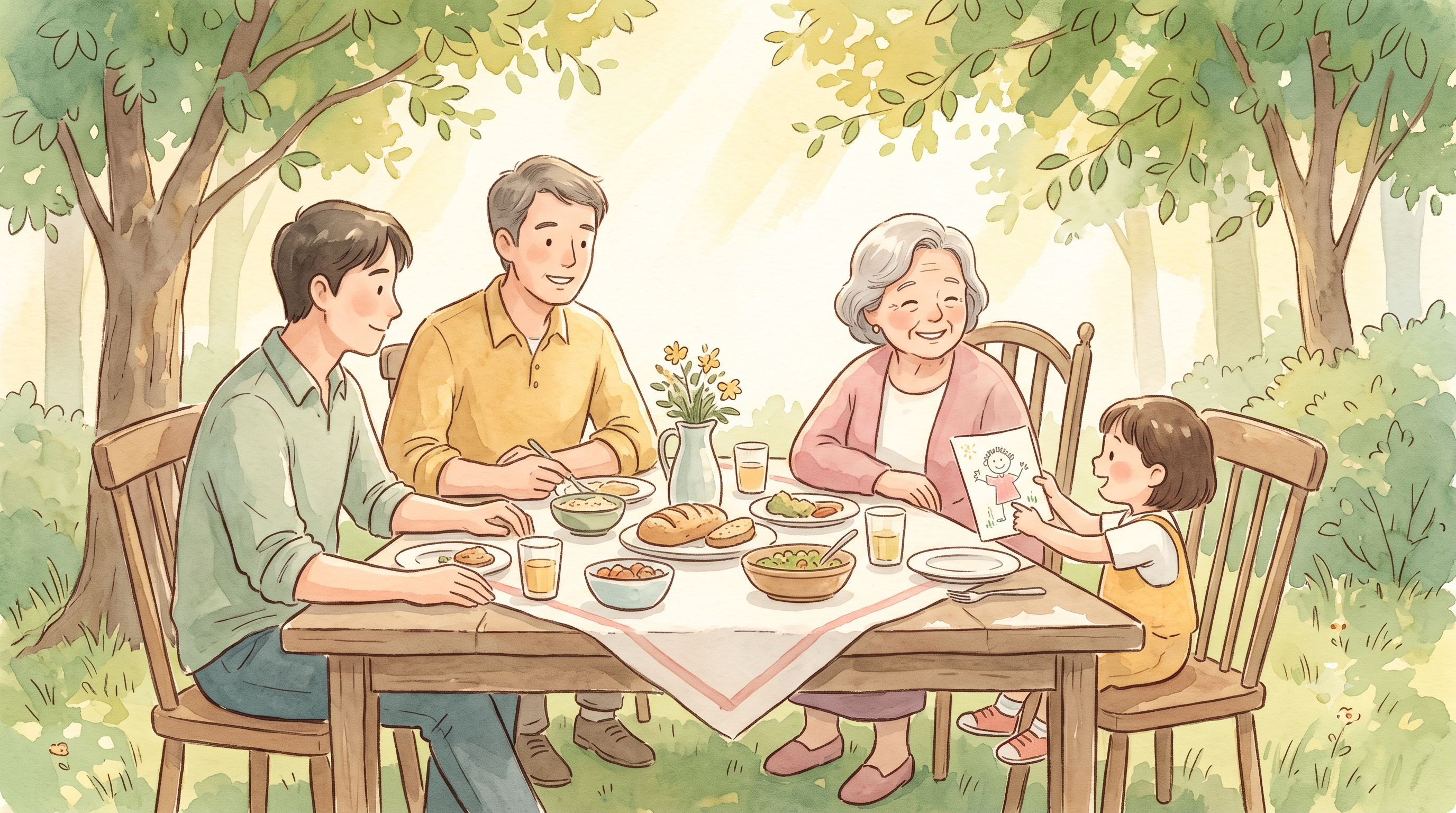
Big family days - birthdays, holidays, reunions - are exactly the occasions when families most want Grandma there, and exactly the environments dementia handles worst: noise, crowds, broken routines, and a dozen conversations at once. The fix isn't excluding her, and it isn't pretending nothing has changed. It's designing the day differently: smaller doses, quieter corners, a familiar rhythm, and children who've been prepared for what they might see. Done that way, gatherings stop being something the family survives and go back to being something everyone - including Grandma - actually enjoys.
Big family days - birthdays, holidays, reunions - are exactly the occasions when families most want Grandma there, and exactly the environments dementia handles worst: noise, crowds, broken routines, and a dozen conversations at once. The fix isn't excluding her, and it isn't pretending nothing has changed. It's designing the day differently: smaller doses, quieter corners, a familiar rhythm, and children who've been prepared for what they might see. Done that way, gatherings stop being something the family survives and go back to being something everyone - including Grandma - actually enjoys.
Why are gatherings so hard for someone with dementia?
Because everything that makes a party a party - people, noise, novelty, excitement - is cognitive load. A person with dementia is already working hard to track faces, names, and conversation; multiply that by twenty relatives and a loud kitchen and the result is often anxiety, agitation, withdrawal, or exhaustion. Late afternoons can be harder still, when fatigue peaks. None of this means gatherings are off the table. It means the default gathering needs redesigning.
How do we plan the day around Grandma, not against her?
A handful of adjustments do most of the work:
- Schedule around her best hours. For many people that's late morning or midday - consider a lunch gathering rather than an evening one.
- Keep her routine inside the event. Meals at the usual times, her usual chair, a rest in a quiet room mid-way. Routine is scaffolding; don't dismantle it for the occasion.
- Create a calm corner. One quieter room or garden spot where she can retreat with one or two people at a time. Rotate visitors to her instead of pulling her through the crowd.
- Shrink the guest waves. If the whole clan is coming, stagger arrivals or plan for her to join for a defined window rather than the entire day.
- Cut the sensory noise. Music lower, TV off, dishes that don't clatter, name badges at big reunions - small things that lower the effort of participating.
- Plan the exit ramp. Agree in advance who takes her home (or to her room) when she's had enough, and treat that departure as success, not failure.
How do we prepare the children?
Kids watch big family days closely, and an unprepared child can be frightened by an agitated moment or hurt by a forgotten name - right in front of an audience. Five minutes of preparation prevents most of it. Explain that Grandma's illness makes busy rooms tiring, that she might get muddled or need quiet time, and that none of it is anyone's fault. Then give them jobs, because children do better with a role than a warning: delivering her plate, showing her the photo book, being her "quiet corner buddy" for ten minutes. If your child is anxious about seeing her, our guide on when a child is scared to visit walks through it gently.
What about the moments that go wrong?
Something usually wobbles - a repeated story, a mixed-up name, a flash of agitation, tears. Decide now that the family's response will be calm redirection rather than correction: go along with the harmless confusions, change the subject or the room for the hard ones, and never quiz her into the right answer in front of everyone. Brief the adults as deliberately as the children; one well-meaning uncle demanding "Don't you remember me?" can undo an hour of calm. Afterward, debrief the kids in the car: name what happened, praise what they did, and file the day under good by ending with something sweet.
Is it still worth it?
Deeply. Even when the details don't stick, the feelings do - people with dementia carry the emotional tone of a day long after its events fade. A gathering designed with kindness leaves her with warmth she can't explain and gives your children something better than a perfect party: the sight of a family bending, together, around someone they love.
Frequently asked questions
Should a grandparent with dementia still come to big family events?+
In most cases yes - with the day adapted: her best hours, a quiet retreat space, her routine kept intact, and a planned early exit. Inclusion with design beats both exclusion and an unmodified marathon day.
How long should someone with dementia stay at a family gathering?+
Follow her energy, not the schedule. For many people one to three hours is plenty, ideally at their best time of day. A short visit that ends well is worth more than a full day that ends in distress.
How do I explain a grandparent's behavior to kids at a party?+
Before the event, in one minute: "Grandma's illness makes busy rooms tiring, so she might get muddled or need quiet time - it's not about you, and you can help by keeping her company in the calm corner." Prepared children respond with helpfulness rather than fear.